
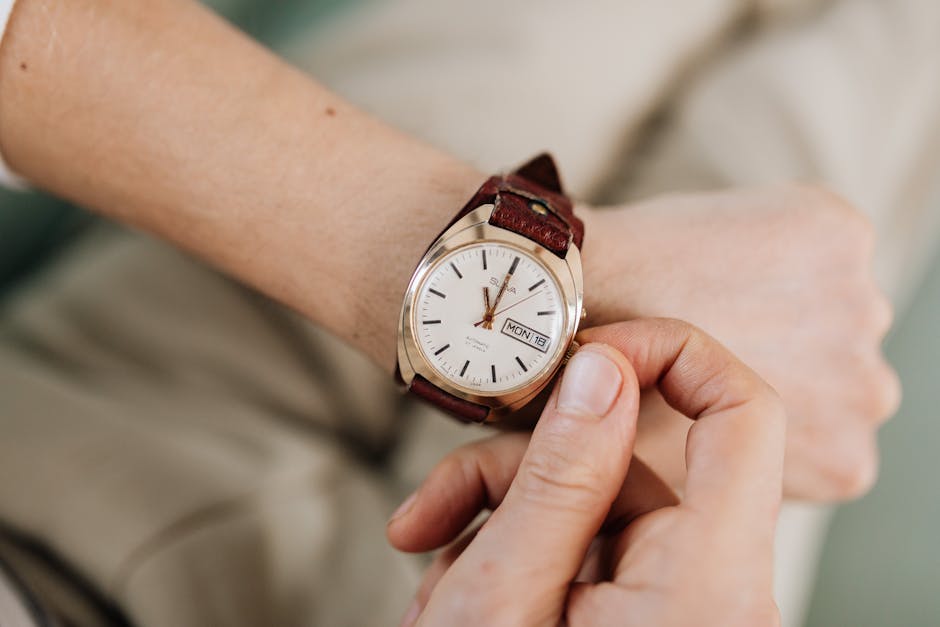
Choosing a wristwatch in an era where every glowing screen in our vicinity displays the time with atomic precision might seem like a redundant exercise. However, for those who appreciate the intersection of mechanical engineering and personal expression, the watch remains one of the few functional pieces of jewelry that carries both sentimental and often financial weight. The landscape of feminine horology has shifted away from the ‘shrink it and pink it’ philosophy of the early 2000s, moving instead toward a sophisticated appreciation for movement, heritage, and proportions that respect the wearer’s wrist without sacrificing presence. When we look at the current market, we see a fascinating tension between the resurgence of vintage-inspired rectangular cases and the growing demand for robust, integrated-bracelet sports watches that can handle the rigors of a daily commute or a weekend hike.
How to evaluate a luxury watch for women before buying
Before committing to a four or five-figure purchase, one must look past the initial aesthetic appeal and consider the technical architecture of the timepiece. The most immediate decision usually involves the movement: quartz or mechanical. Many high-end women’s watches utilize quartz movements for their thinness and reliability. From a researcher’s perspective, quartz is objectively more accurate, losing only a few seconds per month. However, a mechanical or automatic movement represents a connection to traditional craftsmanship. These watches use a series of gears and springs, often visible through a sapphire case back, and they require the movement of your wrist to stay wound. If you aren’t planning to wear the watch every day, an automatic might stop, requiring you to reset the time—a minor inconvenience that some find charming and others find frustrating.
Understanding case size and lug-to-lug measurements
Case diameter, usually measured in millimeters, is the standard metric for size, but it is often misleading. A 36mm watch with long, straight lugs might wear much larger than a 38mm watch with curved lugs that hug the wrist. For most women, the ‘sweet spot’ for a classic look typically falls between 26mm and 34mm. However, the trend toward larger, more ‘unisex’ styles has made 36mm and even 40mm cases common choices for those who want a bolder statement. It is essential to measure the flat surface area of your wrist. If the lugs of the watch overhang your wrist bone, the watch is technically too large, which can lead to discomfort and increased risk of the case catching on doorframes or clothing.
Material durability and daily wear considerations
Stainless steel remains the gold standard for daily wear due to its resistance to corrosion and scratches. Specifically, 316L or 904L steel (used by Rolex) offers a balance of luster and toughness. If you are looking at gold, remember that 18k gold is significantly softer than steel and will develop a ‘patina’ of fine scratches over time. This isn’t necessarily a bad thing—it tells the story of the watch’s life—but it is a factor for those who want their items to remain in pristine condition. For a middle ground, two-tone (steel and gold) watches provide versatility, allowing the piece to coordinate with both silver and gold jewelry, making them an excellent choice for a primary ‘one-and-only’ watch.
Choosing between a leather strap and a metal bracelet isn’t just about style; it’s about climate. Leather absorbs sweat and oils, meaning it will likely need replacement every 12 to 24 months in humid environments, whereas a steel bracelet can last a lifetime with occasional cleaning.
Detailed reviews of the top 5 women’s watches for 2024
The following selection represents a cross-section of the market, ranging from entry-level luxury to high-end icons. Each of these pieces has been selected based on its historical significance, the quality of its construction, and its projected ability to remain relevant in a collection for decades rather than seasons.
1. Cartier Tank Must (Small or Large Model)
The Cartier Tank is arguably the most famous rectangular watch in history. Inspired by the top-down view of a Renault tank from World War I, its design has remained largely unchanged since 1917. The current ‘Must’ collection offers a more accessible entry point into the Cartier world. It features the signature Roman numerals, blued-steel sword-shaped hands, and a sapphire cabochon set into the winding crown. The proportions are mathematically satisfying, adhering to the golden ratio that has made it a favorite of icons from Jackie Kennedy to Princess Diana.
- Approximate Price: $3,300 – $3,600
- Pros: Unmatched heritage, incredibly versatile for formal and casual wear, holds value exceptionally well.
- Cons: The entry-level model uses a high-autonomy quartz movement rather than a mechanical one, which purists might dislike at this price point.
2. Rolex Lady-Datejust 28
The Datejust is the quintessential ‘everyday’ luxury watch. It was the first self-winding chronometer wristwatch to display the date in a window on the dial. For women, the 28mm version offers a delicate profile that conceals a powerhouse of engineering. Inside is the Calibre 2236, a mechanical movement featuring a Syloxi hairspring in silicon, which is patented by Rolex and provides high resistance to magnetic fields and temperature variations. It is a watch designed to be worn while swimming (waterproof to 100 meters), at the office, and at a gala.
- Approximate Price: $7,200 (Steel) to $15,000+ (Gold/Diamonds)
- Pros: Extremely robust, 100m water resistance, best-in-class resale value.
- Cons: High retail price and significant difficulty finding specific configurations at authorized dealers without a waitlist.
3. Tissot PRX 35mm Powermatic 80
If you are looking for the ‘integrated bracelet’ look made famous by the Audemars Piguet Royal Oak but don’t want to spend the price of a mid-sized sedan, the Tissot PRX is the answer. The 35mm size is a recent addition that perfectly suits smaller wrists while maintaining the 1970s ‘disco’ aesthetic. The ‘Powermatic 80’ movement is a marvel at this price point, offering an 80-hour power reserve, meaning you can take it off on Friday evening and it will still be ticking on Monday morning.
- Approximate Price: $695 – $750
- Pros: Incredible value for a Swiss automatic movement, stunning waffle-pattern dial, very comfortable bracelet.
- Cons: The integrated bracelet design means you cannot easily swap it for a standard leather strap.
4. Longines DolceVita
Longines has long been the ‘quiet’ alternative to Cartier, offering similar Art Deco elegance with a focus on ‘Elegance is an Attitude.’ The DolceVita collection features a rectangular case but with softer, more rounded edges than the Tank. It often comes on a beautiful ‘beads of rice’ bracelet that feels more like jewelry than a tool. For those who find the Cartier Tank a bit too rigid or masculine, the DolceVita offers a softer, more feminine interpretation of the rectangular watch.
- Approximate Price: $1,600 – $1,900
- Pros: Very high level of finishing for the price, beautiful bracelet options, available in various dial colors.
- Cons: Water resistance is only 30 meters, meaning it should not be worn near water or in heavy rain.
5. Seiko Lukia (Solar)
For the practical-minded researcher, the Seiko Lukia is a fascinating choice. Primarily a mainstay of the Japanese domestic market, it has gained international popularity for its use of solar technology. The watch charges from any light source, eliminating the need for battery changes or manual winding. The ‘Frost’ dials and sapphire crystals give it a premium feel that punches far above its weight class. It is the definition of ‘set it and forget it’ luxury.
- Approximate Price: $450 – $600
- Pros: Solar-powered convenience, high-quality Japanese craftsmanship, very durable Diashield coating.
- Cons: Can be difficult to find in local US or European retail stores; often requires ordering from Japanese exporters.
| Model | Movement | Case Size | Water Resistance | Best For |
|---|---|---|---|---|
| Cartier Tank Must | Quartz (High Autonomy) | 22mm – 25.5mm (width) | 30m | Classic Style Icons |
| Rolex Lady-Datejust | Automatic (Mechanical) | 28mm | 100m | Investment & Durability |
| Tissot PRX 35mm | Automatic (80hr Reserve) | 35mm | 100m | Modern/Sporty Value |
| Longines DolceVita | Quartz or Automatic | 20.8mm (width) | 30m | Soft Art Deco Elegance |
| Seiko Lukia | Solar Quartz | 31mm | 10m | Practical Daily Wear |
Long-term maintenance and value retention for women’s timepieces


A watch is a mechanical object, and like a car, it requires servicing. For a mechanical watch, the oils inside will eventually dry up or gum up, which can happen every 5 to 10 years. A full service involves taking the entire movement apart, cleaning the components, and re-oiling them. This can cost anywhere from $400 to $1,000 depending on the brand. Quartz watches are much simpler; they just need a battery change every 2 to 3 years, though Cartier’s new high-autonomy quartz movements claim to last up to 8 years. Ignoring maintenance can lead to permanent damage to the movement, which significantly decreases the watch’s value and functionality.
The reality of resale value and depreciation
It is a common misconception that all luxury watches appreciate in value. In reality, most watches behave like cars: they lose 20% to 40% of their value the moment you walk out of the store. Rolex and Cartier are the notable exceptions to this rule. A stainless steel Rolex Lady-Datejust will often sell on the secondary market for close to its original retail price because demand consistently outstrips supply. Cartier pieces tend to hold about 70-80% of their value, especially the classic shapes like the Tank and Santos. Brands like Tissot or Longines are excellent watches, but they should be bought for the pleasure of wearing them, not as a financial investment, as their resale value typically hovers around 40-50% of retail.
Protecting your investment through proper storage
When you aren’t wearing your watch, how you store it matters. If you have an automatic watch, you might consider a watch winder, which keeps the watch in motion so it doesn’t stop. However, some researchers argue that winders cause unnecessary wear on the movement. A simple padded watch box is usually sufficient. Most importantly, keep your watch away from strong magnetic fields—think tablet covers, speakers, or even some handbags with magnetic clasps. Magnetism is the number one cause of a mechanical watch suddenly running fast or slow, as it causes the delicate hairspring to stick together. If your watch gets magnetized, a jeweler can usually fix it in five minutes with a degausser, but it’s better to avoid the situation entirely by being mindful of where you set your watch down at night.
Ultimately, the best watch is the one that you find yourself glancing at even when you don’t need to know the time. Whether it is the historical weight of a Cartier or the modern engineering of a Tissot, these pieces serve as small, ticking reminders of our own milestones and tastes. They are one of the few items we buy today that have a genuine chance of being passed down to the next generation, provided we choose with an eye for quality and treat them with the respect that fine machinery deserves.